

The Last Breath of Peace, by Lewis J. Sutcliffe
I read this whole novella in one day whilst at work, cramming in pages between customers because I couldn’t tear myself away from it (hopefully my managers aren’t reading this XD).
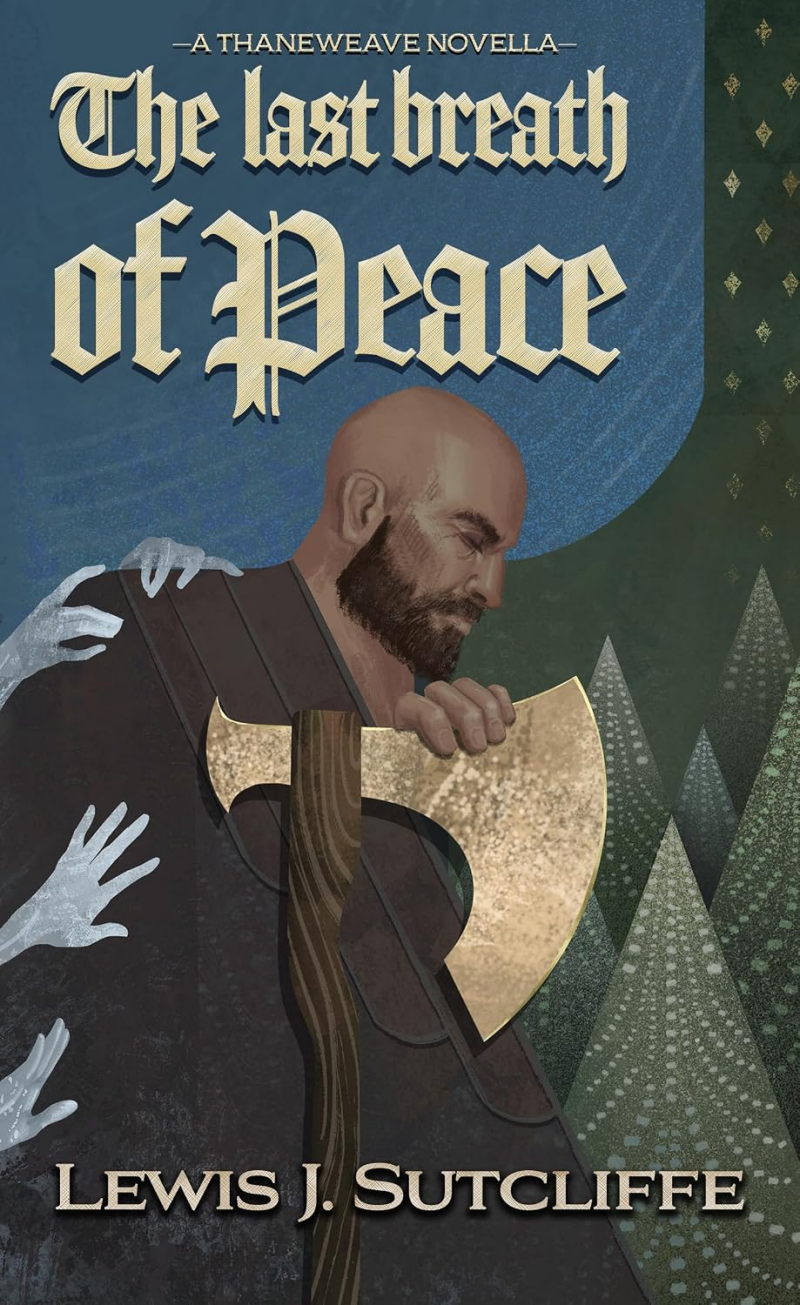
The Last Breath of Peace follows recluse woodsman Sorin who, upon rescuing badly injured elf messenger Kaelen, is drawn into a savage clash between humans and elves. Kaelen carries a warning for the human king, Gregory, imploring him to make peace with the war-hungry elven khans to prevent a violent and bloody campaign that will benefit neither side.
I think what stands out most about this story, at least to me, is the care and authenticity with which it handles its central theme: war, and the realistic brutality of it. This novella doesn’t shy away from how unfair and horrendous war is, and how seemingly pointless and barbaric individual battles can be. It also shines a light on how war sweeps soldiers up, turning them into killing machines no longer able to comprehend their fellow peoples human at all. This is best exemplified with the story’s villain, Prince Oswald, who sees his enemy not as people, but as targets to cut down, as steps on his path to glory. Oswald has blinded himself with his own dogma, and it shows how easy it is for those who are framed as villains to be reduced to less-than-human. It’s a way of justifying war crimes, and it’s starkly prevalent in the present day.
Sorin himself is a compelling protagonist. He’s a bit of a misanthrope (can relate), and just wants to plod through life in his forest home, avoiding people, politics, and war. At first resistant to Kaelen’s plea for aid, he is eventually cajoled into action, though never loses his grip on his seemingly terminal cynicism. He’ll do the right thing, and can understand what the right thing is, but he won’t believe he can make a difference.
Sorin and Kaelen engage in a fair few quite philosophical conversations on their journey. The dialogue perfectly complements the poetic writing style, and I was pleasantly surprised by how lean and tight and punchy these conversations were. This being a novella, there’s only a limited number of words to play with, and the author proves deft at exploring heavy topics in a very efficient manner. Sorin and Kaelen talk about the futility of individual people trying to prevent wars between nations, the importance of the smaller gestures, and how fragile but critical hope can be.
I honestly only have good things to say about this one, because I think it does a stellar job establishing this world and setting up a dark and epic story in the books to come. The epilogue implies Sorin’s part in this isn’t yet over, and I for one cannot wait to see how this all unfolds in the first book of the Thaneweave.
Create Your Own Website With Webador