

Death Show Colossus, by Bill Adams
If I had to boil down this book to as few words as possible, I’d say this: it’s one hell of a whiplash-inducing ride that drags you along in its wake and refuses to let go!
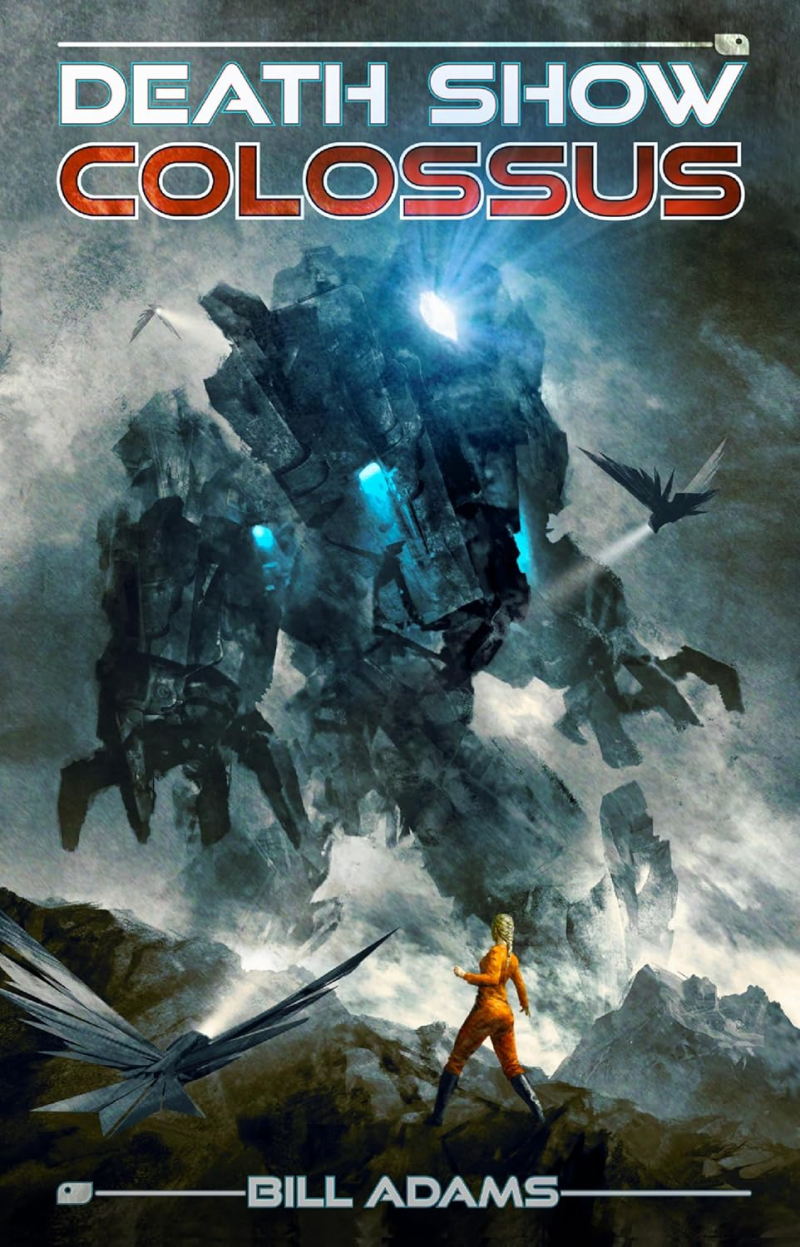
Death Show Colossus follows 2 survival siblings, Quinne and Benn, as they try to carve out a life for themselves down in the Dross, this world’s equivalent of the slums. They live in a place called the Cauldron, which is in turn lorded over by the Spire, where the elite reside. Beyond the Cauldron’s protection is, supposedly, a bleak and barren world, patrolled by a 1,000 foot tall mechanical behemoth that’s revered as a god. In order to have a shot of moving from the Dross to the Spire, the Drossbred (and especially those with magic, called fluxblessed) can enter a lottery to be chosen to engage in a televised tournament where they must escape the Spire’s elite Hunters and climb the mechanical god to reach its summit.
First and foremost, that set-up is insane and I love it. It’s got recognisable seasonings of the Hunger Games, especially with the televised nature of the tournament and Spire leader Elysia Vera’s desire to make it as spectacular and gory as possible to increase her ratings with the population. But it also very much carves its own niche with its unique setting, a setting flavoured by robotic creations that give this book a borderline cyberpunk atmosphere with smatterings of industrial revolution. For example, there are the Diamond Dogs, the name for both Vera’s corrupt policing force and the mechanical canines the officers are handlers of, which are literally constructed of diamond. There are the dronehawks, which are essentially sentient CCTV cameras powered by someone who is bonded to them. There are also holos and holoscreens, to better televise the gory brutality of the tournament and to spy on the populace.
As a whole, the worldbuilding felt very rich and consistent, and the world of the Cauldron very much comes across as a setting heavily impacted by its component parts. Everything has its place and is embedded in the society, and everything is much more meaningful than just cool set-dressing.
The two main characters, both riddled with the aftermath of horrific personal tragedies, are compelling to the extreme. Quinne, being the older sibling, is understandable protective of Benn and willing to take insane risks to keep him fed and safe. She also boasts fairly powerful magic, which in this world is fuelled by vials of liquid flux that, when imbibed, activate a fluxblessed’s latent abilities. On the other hand, Benn is a teenager, reaching that dangerous age where he not only wants to help out, but believes he can. He’s the kind of adolescent protagonist I love: he does make reckless decisions as a result of his youth and inexperience, but he’s canny enough to recognise when he’s done so and endeavours to fix his mistakes.
When they’re both swept up into the most recent tournament, they find themselves fighting not just for their own survival, but also for a larger cause. Although drawn into plots and rebellions far bigger and more complex than they could have ever guessed, Quinne and Benn have such a fierce shared will to live that they fling themselves headfirst into the fray and adapt on the fly. I really loved that they never felt too competent or powerful; they were in true danger at pretty much every story beat, but were always determined enough to stand a chance.
The magic system itself also deserves a mention because, like basically everything else in this book, it’s very cool. Certain strands of flux blessing grant users abilities that allow for MCU-level boss fights, with combatants literally tearing each other apart and flinging each other around in ways that would obliterate the average, non-magical person. I adored the sheer brutality of these fight scenes, and we never once shy away from the killing blows, the crushed skulls, the popped eyeballs.
This was a very fast-paced book, too. At only 331 pages long, it sure as hell packs in a lot of action, plot development, and plentiful twists, making every page count. Once the tournament to climb the colossus starts at around page 100, the action never releases its grip on your throat until right at the very end. I thrived on this pacing for the most part, though there were a few familial revelations pertaining to Quinne and Benn that might’ve benefited from a little breathing room for the MCs and the reader to fully apprecaite them. Other than that, though, I didn’t want to put this book down, even if it had let me.
This is my second book by this author, and it goes without saying that it won’t be my last.
Create Your Own Website With Webador